
If your business serves Sugar Land, Katy, Richmond, Fulshear, and Missouri City, but you only show up in search results for one of them, your website has a service-area problem. Most companies try to rank with a single homepage. Google rarely lets that work across a whole region. Service area pages SEO is how you fix it, one town at a time.
Why one homepage cannot rank in every town you serve
A homepage has to speak to everyone, so it ends up speaking to no one in particular. Google reads that page and sees a general business. It does not see a plumber in Richmond or a med spa in Katy. So it ranks you where your address and reviews are strongest, and ignores the rest.
Fort Bend covers a lot of ground. Katy, Richmond, Fulshear, Missouri City, Stafford, and Rosenberg each have their own competition, their own landmarks, and their own search behavior. One page cannot carry all of that weight. Separate, well-built pages can.
What a service area page needs to earn rankings
A service area page is not a copy of your homepage with a new city name. It is a focused page about what you do, for the people in one specific place. Here is the checklist we run through before we publish one.
1. One page per town or service area
Give each significant market its own URL. A Sugar Land page and a Katy page should never share the same text. If you serve ten towns, build ten real pages, not one page with ten city names sprinkled in.
2. Local proof that only your business can publish
Add details that a competitor in another state cannot copy. Mention nearby neighborhoods, the roads you drive, or the local projects you finished. Reference specific areas and landmarks when they are relevant. Real local detail is what separates a useful page from a template.
3. Keywords that match how people search each city
People rarely type just your service. They type the service plus a place. Build each page around that pattern, then let the page support it naturally. Use your main term, service area pages seo, as the theme that ties the set together, and let each page own its own city phrase.
4. Internal links that connect the pages
Link your service pages from the main service page, your footer, and your navigation where it makes sense. Link them to each other with clear anchor text. This tells Google the pages are related and helps visitors move from one market to the next.
5. Original content on every page
Write each page from scratch. Vary the examples, the proof, and the questions you answer. Swapping city names into the same paragraphs creates duplicate content, and duplicate content does not rank.
The mistakes that quietly hurt rankings
The fastest way to lose ground is to publish thin pages. A service area page with two short paragraphs and a map adds no value, and Google treats it as noise. Combine the smallest towns into one broader page until you have enough real content to justify a separate URL.
The second mistake is building doorway pages. These are pages created only to catch search traffic, with no useful information for a reader. They can trigger a penalty and drag down the pages that were working. Every service area page should help a real customer make a decision.
A third mistake is ignoring your Google Business Profile. Service area pages and your profile work together. Strong pages plus an optimized profile with accurate service areas and fresh reviews create the local visibility that actually drives calls.
A simple build order
Start with the towns where you already have customers and reviews. Build one page, get it indexed, and watch how it performs. Then repeat the process for the next market. Rushing to publish fifteen pages at once usually produces fifteen weak pages.
Give each page a clear title, a single main keyword, and a short list of nearby areas you serve. Keep the writing plain and specific. Answer the questions a local customer would actually ask.
Measuring whether it worked
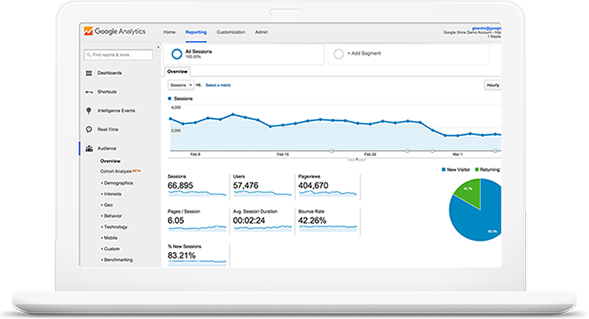
Track rankings by city, not just overall. A page that ranks third in Fulshear is a win even if it does nothing in Houston. Watch calls, form fills, and direction requests from each area. Over a few months, the data tells you which markets deserve more attention.
Your next step
Service area pages SEO is the bridge between the towns you serve and the customers searching in them. Build the pages well, connect them, and prove you belong in each market. If you want a clear plan for your service area, our team in Sugar Land can audit your current pages and show you exactly where the gaps are.

Lead SEO & Growth Strategist
Founder of Inmode Interactive, a local SEO agency based in Sugar Land, Texas. He helps local businesses rank on page 1 of Google, win the map pack, and turn searches into real calls and customers.