
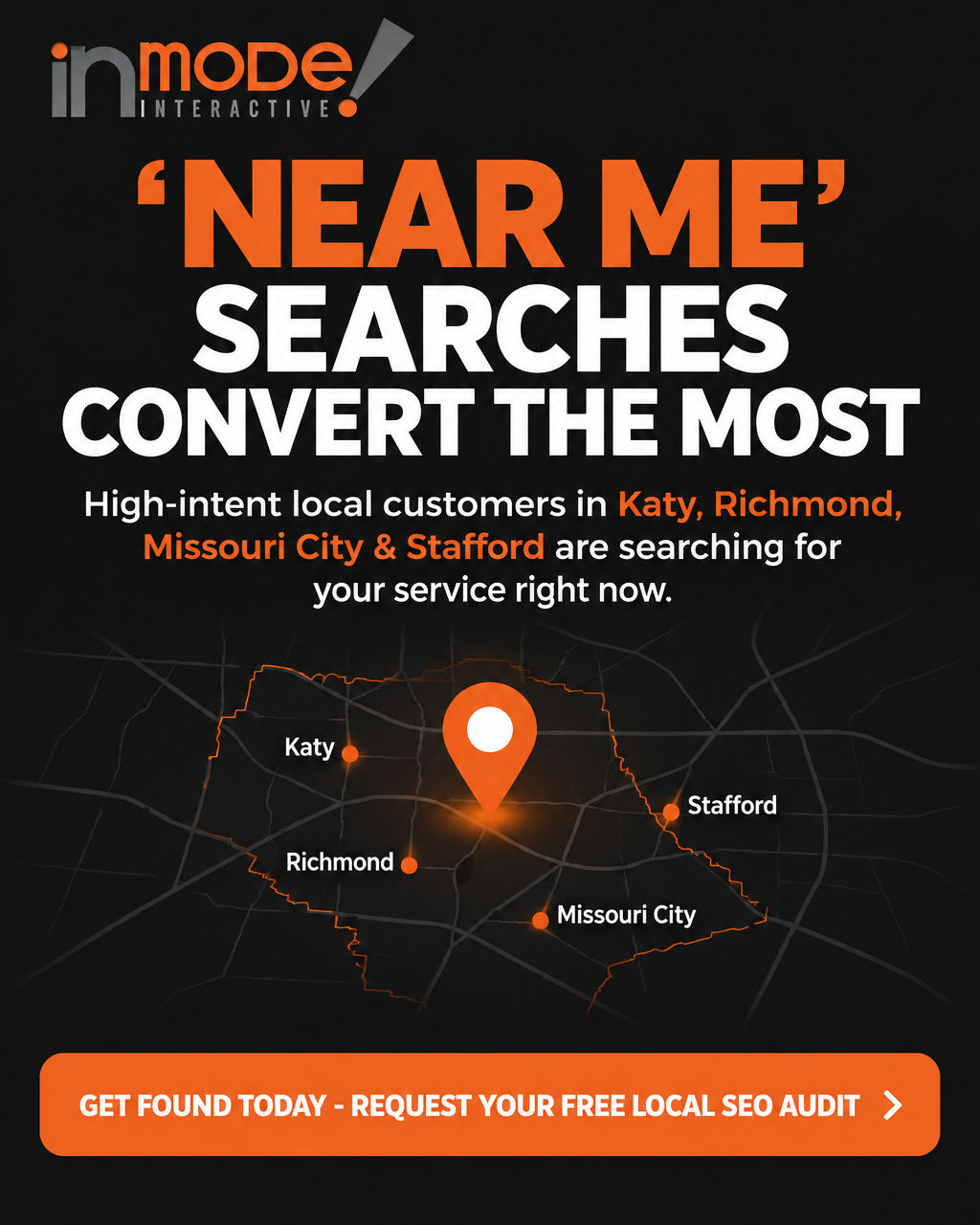
A pipe bursts on a Saturday morning. Water is spreading across the kitchen floor. The homeowner grabs a phone and types three words: plumber near me.
Within seconds, they see a map with three names and a list below it. They call the first one that looks trustworthy. One business gets the job. Everyone else never knew the search happened.
That is what a “near me” search looks like from the customer’s side. It is fast, local, and high-intent. People who search this way are not browsing. They have a problem and they want it solved today. Winning these searches is one of the fastest ways a local business grows, and losing them is one of the quietest ways it stalls.
Why Your Business Loses “Near Me” Searches
When someone types “plumber near me,” Google does not just look at who does good work. It looks at who looks like the best, closest, most trusted answer to that exact query.
Directories and review sites often win this round. They aggregate hundreds of businesses, carry strong domain authority, and match the broad phrase in the searcher’s own words. Building a listing on a major directory can help, and it can bring in a lead or two. But a directory listing also puts you in a lineup next to your competitors, and it never builds an asset you own.
The businesses that win “near me” searches repeatedly do something different. They build a strong local presence on Google itself, so they show up in the map pack as the obvious answer. That presence comes from a handful of signals Google reads before it ever looks at your website copy.
The Signals Google Checks First
Before you spend money on ads or a redesign, fix the signals that decide where you rank in local results. These carry the most weight, and most of them cost nothing but time.
1. Build Out Your Google Business Profile
Your Google Business Profile is the storefront Google shows in the map pack. An incomplete profile is invisible.
Start with the basics: correct business name, accurate address or service area, phone number, and hours. Then go deeper than most businesses do:
- Choose the right primary category. It matters more than any keyword you can stuff into a description.
- Add secondary categories for every real service you offer.
- List your products and services with plain descriptions.
- Upload real photos of your team, your work, and your location. Fresh photos every month signal an active business.
- Use Google Posts weekly to show recent work, offers, and updates.
- Fill out the Q&A section yourself with the questions customers actually ask.
Every one of these steps makes you a more complete answer. Google rewards completeness with visibility.
2. Earn Reviews and Answer Every One
Reviews are the trust signal customers read and Google weighs. A steady flow of recent, detailed reviews beats a burst of old ones, so ask for a review after every job while the experience is fresh.
Then respond to all of them, the good and the bad. A short, professional reply shows you are engaged and gives you space to answer a concern in public. When customers mention your service area or the specific service they needed, those words reinforce what you do and where you do it.
3. Create Real Service-Area Pages
If you serve Sugar Land, Katy, Richmond, Fulshear, Missouri City, and Stafford, you need a page for each market. One home page cannot rank for every city on its own.
The trap is copy-pasting one page and swapping the city name. That reads as thin content to both customers and Google. Write each page around the actual work you do there: local jobs, local neighborhoods, local questions. A homeowner in Fulshear should feel the page was written for them, because it was.
4. Publish Local Content That Matches How People Search
People search in full sentences, not keywords. They ask “how much does it cost to replace a water heater in Sugar Land,” not “water heater replacement.”
Answer those questions in plain language on your blog. Each article should solve one problem, name your service area when it fits, and link back to the relevant service page. This builds a topical cluster that tells Google you are the local authority on your trade, not just a business that exists.
Measure Calls, Not Just Clicks
Traffic that never calls you is not progress. Track the numbers that connect to revenue.
Watch your Google Business Profile insights: calls, direction requests, website clicks, and how customers found you. Set up call tracking and form tracking on your site so every lead has a source. Then you can see which pages, cities, and keywords actually bring in booked jobs, and put more effort where it pays.
If your phone is not ringing more after a few months of local SEO work, something in the pipeline is broken. Fix the weak link before spending more.
Turn Local Visibility Into Booked Jobs
“Near me” searches are the closest thing to a customer walking in the front door. The searcher is nearby, ready, and asking for exactly what you sell.
You do not have to outrank a national directory on its home turf. You have to be the most complete, trusted, nearby answer in your own market. Do that, and the searcher picks you before they ever scroll past the map.
That is what local SEO is built for: more calls, more qualified leads, and more booked jobs from customers who are already looking for you.
If you are not sure which signals are holding your business back, a local SEO audit is the fastest way to find out. Inmode Interactive helps businesses across Sugar Land, Fort Bend County, and the greater Houston area find the gaps, fix them, and turn searches into customers. Request your free local SEO audit and see where you stand.
FAQ
How long does it take to rank in “near me” searches?
Expect the first movement in local results within 60 to 90 days once your Google Business Profile, reviews, and service-area pages are in shape. Competitive markets take longer, which is why consistent monthly work beats a one-time fix.
Do I still need a directory listing if I rank on Google?
Yes, listings on trusted directories can add citations and referral traffic. Just do not treat them as your main strategy. Build the assets you own, starting with your Google Business Profile and your own website.
What matters most: reviews or the Google Business Profile?
Both, and they work together. A complete profile gets you into the running, and recent reviews are what push you ahead of the business right next to you on the map.
Let’s Talk About Growing Your Business.
Whether it’s Local SEO, Google Business Profile optimization, or a better-performing website, we’re here to help you get noticed.
Call or Text: 832-791-3337
Schedule a quick phone consultation with Inmode Interactive.