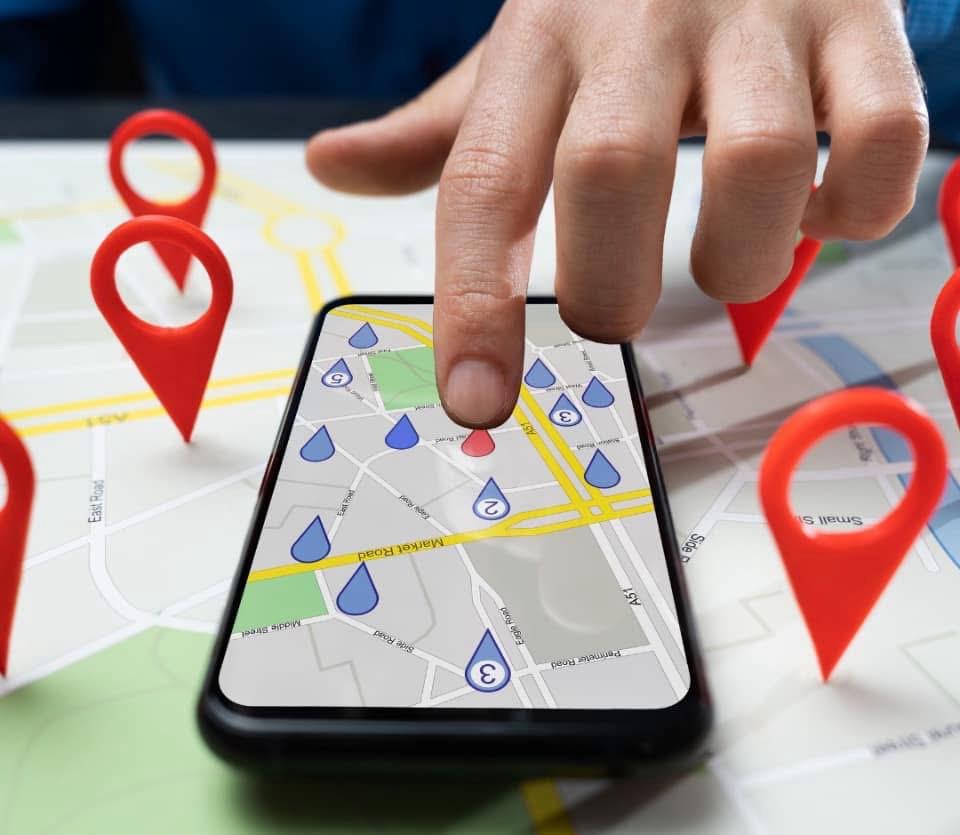

Every day, customers across Sugar Land, Fort Bend County, and the surrounding Houston area open Google Maps to find a business that can help them right now. They search “near me,” glance at the top three results, check the star rating and the reviews, and then pick up the phone or drive over.
If your business is not in that top group, you are losing calls, appointments, and foot traffic every single day. The good news? Ranking high on Google Maps is not a mystery. It is a repeatable, step-by-step process. Here is the exact local SEO checklist we use to help local business owners own the top of the map.
1. Claim and verify your Google Business Profile
This is the foundation. If you have not claimed your Google Business Profile, you cannot rank on Google Maps at all. Go to Google Business Profile, find your business, and go through the verification process. Usually Google sends a postcard, a phone call, or a video verification.
Once you are verified, do not just set it and forget it. A claimed profile that you actively manage is what signals Google that your business is real, active, and worth showing to local searchers.
2. Make your business details exact and complete
Google decides who to show based on how well your profile matches what the searcher typed. That means every field matters.
- Make your business name the real name of your business. Do not stuff keywords into it.
- Pick a category that exactly describes what you do. This is one of the strongest ranking signals.
- Add your address, phone number, website, and business hours. Keep them accurate.
- Write a clear description of what you offer, using the words your customers actually search for.
Inaccurate or incomplete details confuse Google and the algorithm will pass you over for a competitor with a cleaner, more complete profile.
3. Add photos and fresh posts on a regular schedule
Businesses with photos get more clicks, more calls, and more direction requests. Add high-quality photos of your storefront, your team, your work, and your products. Keep adding new ones on a regular basis.
Google also rewards fresh activity. Post offers, updates, and news directly to your profile every couple of weeks. Each post keeps your business visible and signals that you are still operating and engaging with customers.
4. Turn customer reviews into a daily routine
Reviews are one of the most powerful local SEO and reputation signals there is. The businesses with more reviews and higher ratings almost always outrank the ones with few or none.
Make asking for reviews a routine. Send a follow-up text or email to every happy customer and make it one tap to leave a review. Respond to every review, whether it is five stars or one. Thank the people who took the time, and address any complaints directly and professionally.
A steady stream of fresh, genuine reviews tells Google, and your future customers, that your business delivers real results.
5. Keep your name, address, and phone number consistent
Google wants to trust that your business is exactly where you say it is. If your name, address, or phone number appear differently across your website, your Google profile, your social pages, and your local directories, you weaken that trust.
This is called local citation consistency, and it matters. Take inventory of every place your business appears online and make sure the name, address, and phone number match exactly every single time. The most important directories for local businesses are Google, Facebook, and industry-specific directories, along with major city and regional business listings.
6. Build a service-area and location strategy that matches how customers search
How your customers search on Google Maps depends on whether you serve customers at a physical location or you visit them at their homes.
- If customers come to you, your exact address and a strong street-level presence matter most.
- If you travel to customers across Sugar Land, Katy, Richmond, Fulshear, Missouri City, and Stafford, set up your service area in your profile so Google knows which neighborhoods you cover.
Match your website content to the same areas. Publish local landing pages and location-based content that reflect the communities you actually serve. When Google sees that your online presence lines up with a real, active service area, it rewards you with more visible map rankings.
7. Track your results and keep improving
Local SEO is not a one-time project. It is an ongoing process. Check your Google Business Profile insights regularly to see how people are finding you, what they search for, and how many calls and direction requests you are getting.
Watch what is working and double down on it. Watch what is not and fix it. The businesses that stay on top of the map are the ones that keep their profiles active, their reviews flowing, and their data accurate month after month.
Get visible, get found, get more customers
Ranking your business on Google Maps is very doable, but it takes consistency and the right strategy. When you handle it right, the payoff is real: more calls, more appointments, more reviews, more foot traffic, and more revenue.
If you want to stop guessing and start ranking, the local SEO team at Inmode Interactive can do this for you. We are a Houston-area and Sugar Land based search visibility agency that helps local businesses across Fort Bend County get found on Google Maps and turn that visibility into booked jobs and paying customers.
Request your free local SEO audit today and see exactly where your business stands against the competition in your area.